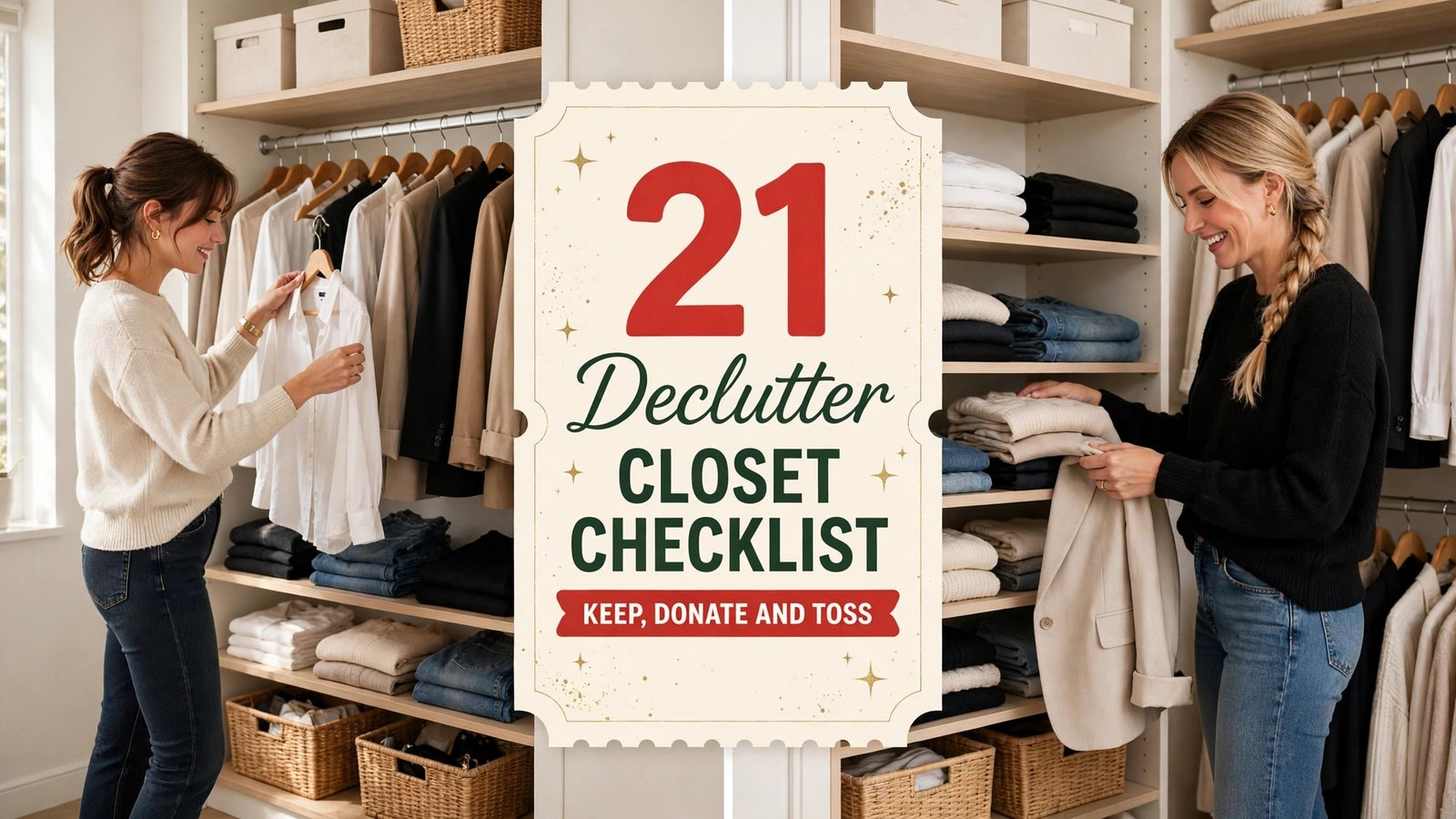
Opening a crowded closet every morning should feel like choosing from favourites, not digging through a pile of maybes. Yet most of us keep clothes we never wear, shoes that pinch, and jewellery we forgot we owned, all because deciding feels harder than ignoring the mess. A proper declutter is not about throwing everything away. It is about keeping what earns its place and letting the rest go with a clear head.
This checklist gives you a simple rule for every single item: keep it, donate it, or toss it. No guilt, no endless maybe piles, no second-guessing a month later. Each step below focuses on one decision, so you can work through your wardrobe in a single afternoon and actually finish.
Grab three bags, put on some music, and start at the top. By the end of this list your closet will be lighter, your outfits will be easier to build, and getting dressed will finally feel like the fun part of the day again.
1. The One-Year Wear Test
Pull out every piece and ask one honest question: have I worn this in the last twelve months? If the answer is no, it goes straight into the donate pile, no matter how lovely it looked on the hanger. Keep the cream knit sweater, the navy blazer, the white cotton shirt and the dark straight jeans you reach for again and again, plus tan leather loafers and gold hoop earrings that finish every outfit.

2. The Fit-Check Rule
If it does not fit your body today, it does not belong in your everyday closet. Try on the black tailored trousers, the white button-down shirt, the red midi dress and the denim jacket, and keep only what fits comfortably right now. A slim leather belt, nude block heels and a silver pendant necklace complete the keepers, while anything that pinches, gaps or needs altering goes to donate.

3. The Duplicate Detector
Lay out every similar piece side by side and keep only the best one of each. Three white tees, two black cardigans and a grey hoodie are doing the same job, so keep the softest white tee, the best-fitting black cardigan and the blue striped shirt, with black ballet flats and pearl stud earrings. The rest are duplicates, and duplicates are donations waiting to happen.

4. The Stain and Damage Verdict
Hold each item up to the light and inspect it honestly. A white linen blouse with a stain that never came out, a grey cashmere sweater with holes, or a black pencil skirt with a broken zip are toss items, not keepers. Keep the beige trench coat, the brown ankle boots, the gold watch and the canvas tote that are still in good shape, and let the damaged pieces go without a second thought.

5. The “Someday” Dream Pieces
Be honest about the sequin cocktail dress and the velvet blazer you bought for a life you do not live. If the satin slip skirt, metallic heels, crystal clutch and rhinestone earrings have waited two years for a someday that never came, donate them so someone else can wear them now. Keep only the faux fur stole if you genuinely love it, and free the rest of the closet from fantasy.

6. The Sentimental Keepsakes Box
Some clothes are memories, not outfits, and they deserve a box, not a hanger. Fold your grandmother’s cardigan, the vintage floral dress, the silk headscarf, the cameo brooch, the lace gloves and the pearl bracelet into one labelled keepsake box. That way the memories stay safe, your closet stays usable, and you stop feeling guilty every time you see them hanging unworn.

7. The Work-Ready Keepers
Your work wardrobe should be a small team of reliable pieces, not a crowd of almost-right ones. Keep the charcoal suit, the white silk blouse, the navy sheath dress and the black pumps that always look polished, with gold stud earrings, a slim watch and a leather portfolio. Anything you would not wear to an important meeting goes straight to the donate bag.
8. The Jeans That Actually Fit
Jeans are the hardest keepers to judge, so try every pair on with a real top and shoes. Keep the dark skinny jeans, the light wash straight jeans, the black wide-leg jeans and the white cropped jeans that fit and flatter, with a denim shirt, white sneakers and tan sandals. Any pair that gaps at the waist, bags at the knees or never leaves the drawer is a donation.

9. The Shoe Sort: Keep, Donate, Toss
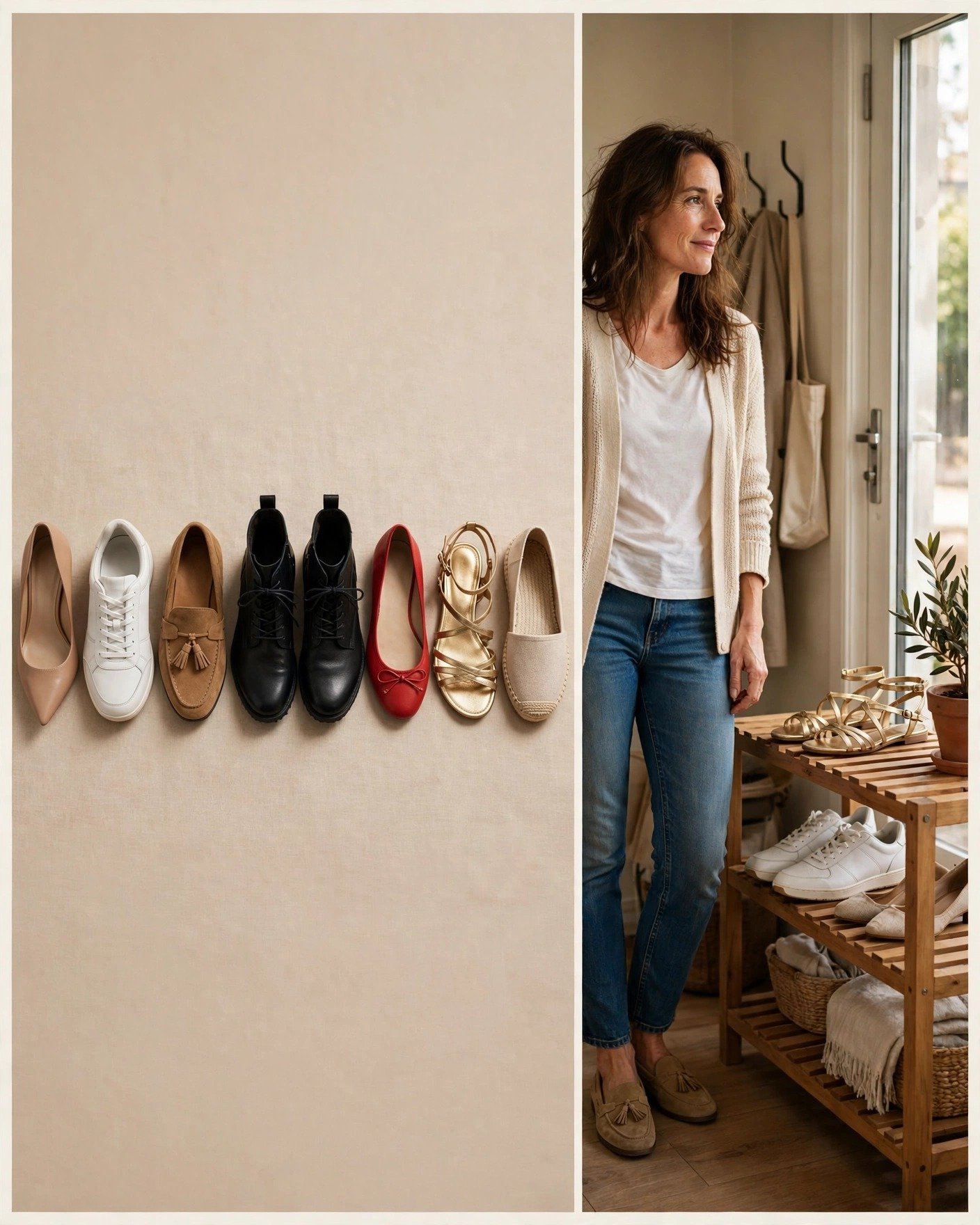
Shoes take up the most space and cause the most guilt, so sort them ruthlessly. Keep the nude heels, white trainers, tan loafers and black ankle boots you actually walk in, plus red ballet flats, gold sandals and canvas espadrilles for variety. Scuffed beyond repair goes in the bin, barely worn goes to donate, and your feet will thank you for the breathing room.
10. The Jewellery Edit
Open the jewellery box and be brutal: tangled chains, single earrings and pieces that turn your skin green are toss items. Keep the gold chain necklace, the pearl earrings, the silver bangle, the turquoise ring, the crystal pendant, the leather wrap bracelet and the diamond studs you reach for weekly. A small, loved collection beats a drawer full of forgotten pieces every single time.

11. The Occasion Outfit Reality Check
Count how many formal events you actually attend in a year, then keep only that many occasion outfits. The black evening gown and the satin jumpsuit earn their space if you go to two events a year; the embellished top, wide-leg trousers, silver stilettos, beaded clutch and chandelier earrings cover the rest. Everything beyond that is a beautiful donation for someone else’s big night.

12. The Colour Palette Rule
Hold every piece against your three best colours and keep only what belongs. A cream sweater, camel coat, navy trousers, blush blouse and white jeans all work together beautifully, with tan mules and a gold pendant to finish. Anything in a colour that fights your palette, no matter how trendy, is a donate item that will only confuse your outfits.

13. The Three-Bag Method
Set up three bags before you start: keep, donate and toss, and every item must land in one of them. The white tee, grey sweater, blue jeans and black flats you love go back in the closet, while the canvas tote, a black bin bag and a kraft donation box wait to collect the rest. No fourth bag, no maybe pile, and no revisiting a decision once the item is in a bag.

14. The Seasonal Swap System
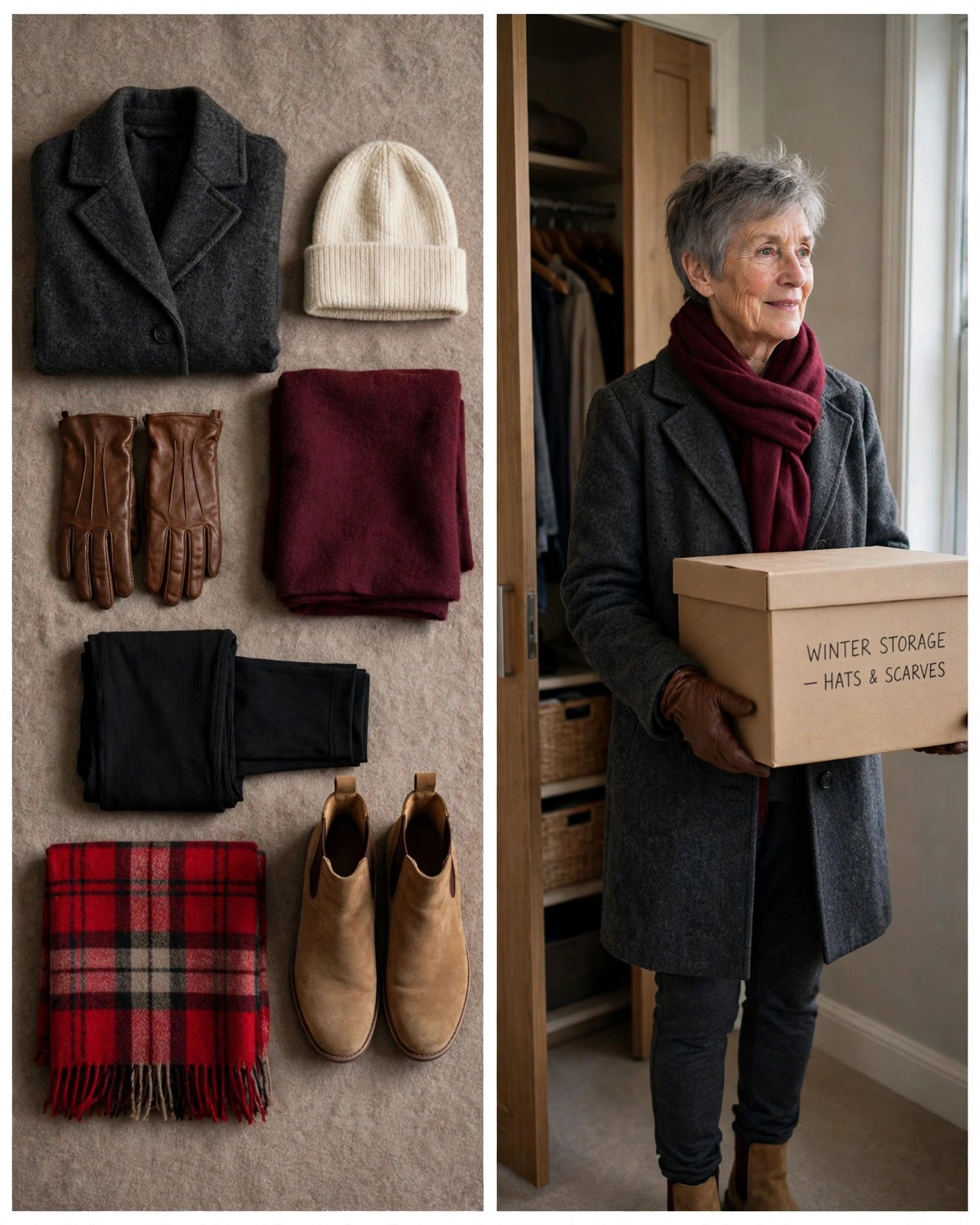
Only the current season belongs in your main closet; everything else lives in storage. Keep the wool coat, cashmere scarf, knit beanie, leather gloves, thermal leggings, suede boots and plaid blanket scarf for winter, and box up the summer pieces. When the seasons change, swap the boxes, and your closet will always feel half the size and twice as useful.
15. The Donate Pile Standards
Donate only what you would be happy to receive yourself. The navy cardigan, floral midi dress, khaki chinos, striped Breton top, brown loafers, canvas backpack and silver hoops are all clean, working and wearable, so they deserve a new home. Anything stained, torn or missing buttons belongs in the bin instead, because charities cannot sell what you would not wear.

16. The Toss-Without-Guilt List
Some things are simply finished, and throwing them away is the kindest thing you can do. The faded grey tee, the stretched leggings, the single sock, the broken-heel pump, the pilling sweater, the tarnished belt and the cracked sunglasses have all served their time. Toss them without guilt, because keeping rubbish does not honour the money you spent on it.

17. The Capsule-Ready Keepers
After the edit, your keepers should be able to build a capsule wardrobe on their own. The white shirt, black blazer, navy trousers, grey tee, dark jeans, nude heels and gold necklace mix into dozens of outfits without a single extra purchase. If a keeper cannot pair with at least three other keepers, it is not a capsule piece, and it goes back into the donate pile.

18. The Accessories Audit
Accessories are small, so they multiply quietly until they own a whole drawer. Keep the silk scarf, leather belt, straw hat, canvas tote, gold chain, sunglasses and patterned headband that you actually wear, and donate the rest. A few well-chosen accessories do more for an outfit than a drawer full of pieces you never reach for.

19. The Handbag and Belt Check
Bags and belts are the easiest place to hide clutter, so empty every bag and test every belt. Keep the tan leather tote, the black crossbody, the cream clutch, the brown belt, the woven belt, the gold-buckle belt and the straw bag that still look smart and hold what you need. Cracked leather, broken clasps and stretched belts go straight to toss, no matter what they cost originally.

20. The Try-On Marathon
Set aside one hour, put on music, and try on every keeper with a real outfit. The red wrap dress, black jumpsuit, white linen suit, green midi skirt, tan wedges, silver cuff and coral lipstick should each make you feel good the moment you put them on. If you keep adjusting, tugging or sighing in the mirror, the piece is not a keeper, and it goes in the donate bag before you can change your mind.

21. The One-In-One-Out Promise
The declutter only lasts if you protect it, so make one simple promise before you close the closet door. For every new piece that comes in, one old piece must go out, whether it is a navy blazer, a white tee, grey trousers, black loafers, a camel coat, a silk scarf or a gold watch. Keep the rule, and you will never need a whole weekend of decluttering again.

In Summary
A closet declutter is not a punishment for owning too much. It is a gift to your future self, the one who gets dressed in five minutes, always finds what she is looking for, and actually wears the clothes she loves. The keep, donate and toss rules in this checklist take the emotion out of every decision, so you can trust your choices and move on.
Start with the one-year test, work through the fit checks and duplicates, and finish with the one-in-one-out promise that keeps the closet calm for good. Donate the good pieces so they get a second life, toss the worn-out ones without guilt, and keep only what fits, flatters and earns its hanger. Your closet, and your mornings, will feel completely different by tomorrow.